
Let’s take a moment to raise our coffee mugs in honor of one of the most celebrated but totally underappreciated pillars of modern business: the corporate silo.
Inspired by the first episode of Luminous Minds, where Dodi Axelson, Head of Communications at Cytiva, shared the insight, “The best way to learn about your audience is through your sales team” we can’t help but reflect… (tongue firmly in cheek 😉).
Sure, tapping into your sales team’s expertise sounds, in theory, like a brilliant idea, but in reality it often leads to a labyrinth of complications and endless issues. So forget all that chatter about collaboration and cross-functional teamwork; nothing says “efficiency” like keeping everyone comfortably confined to their corporate silo, to their very own little kingdoms.
Efficiency through specialization, because collaboration is overrated
Why waste time worrying about what’s happening outside your department? When Accounting doesn’t need to know the inner workings of Marketing, or when IT is free from the interference of Sales, the work flows like clockwork. Each team masters its very own niche, undisturbed by outside perspectives that might, heaven forbid, lead to innovative thinking or, worse, extra work.

Clear hierarchies, zero confusion, who needs teamwork anyway?
Imagine a world without silos: emails from random coworkers, unsolicited ideas flooding your inbox, and decisions made by committees instead of clear chains of command. Silos save us from the chaos by ensuring that decisions come solely from the designated powers that be. After all, who needs those distracting “collaborative” efforts when a good, old-fashioned hierarchy does the job?
Job security 101: how hoarding knowledge makes you irreplacable
One cannot overlook the job security that comes with being the sole keeper of specialized knowledge. In a perfectly siloed organization, your department guards its secrets with the tenacity of a fortress. This way, you become an indispensable asset because your unique expertise is locked away where no one else can reach it. Just be sure not to take long vacations; you wouldn’t want anyone else to learn how to do your job!
Avoiding the dangers of overcommunication
Excessive communication can be a slippery slope leading straight to collaboration, and if things turn really bad, additional responsibilities. Silos help us dodge this bullet by keeping projects strictly within departmental walls. No chance of unwanted input, no risk of having your brilliant idea diluted by a brainstorming session. Keep it simple, keep it contained, keep for yourself.
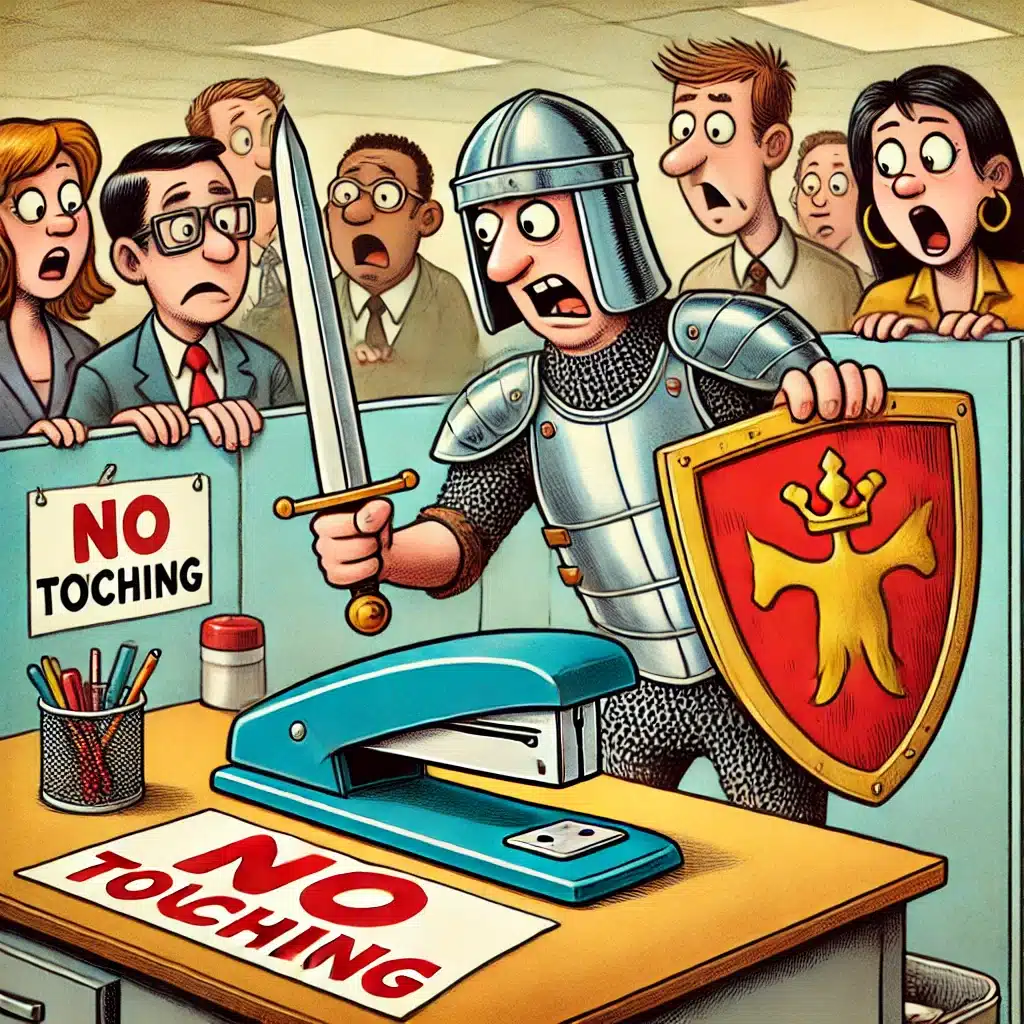
A toast to the fortresses of isolation. Celebrating what keeps us apart!
There’s something to be said for the comfort of knowing that no one will intrude into your workspace to rearrange your desk, or, heaven forbid, borrow your beloved stapler. In the pristine, perfect environment of a corporate silo, each department is its own little fortress, safe from the risks of inter-departmental interaction. It’s a system that guarantees order… and a very, very predictable workday.
So let’s respect the silos. Let’s keep things structured, orderly, and separate.
…….
The (ironic) case for silos: Why breaking barriers might actually work:
Let’s be perfectly clear: this entire celebration of the “benefits” of corporate silos is steeped in satire. In reality, we champion open communication, cross-functional collaboration, and the kind of teamwork that breaks down barriers, not builds them. The true magic in any organization happens when ideas flow freely and departments work together, not when they isolate themselves behind impenetrable walls. So we dare you to contact ”the other side” and see what happens when sales and marketing truly work together.

Related Work

Mars 4, 2026 | 3 min read
Phosworks ASEAN Field Notes #1

November 14, 2023 | 4 min read
How do you make your brand seen and admired? Make it luminous.

September 16, 2025 | 5 min read
From lab coat to brand voice – how to stand out without losing trust

Mars 12, 2026 | 5 min read