
Traditionally, B2B communication has followed a familiar formula: explain the product, prove the value, make the rational argument.
Nothing necessarily wrong with that.
The problem starts when rational becomes predictable.
Similar claims. Similar visuals. Similar promises of innovation, expertise and partnership. And suddenly, playing it safe comes with a risk of its own: being invisible.
It’s a subject we’ve discussed at Phosworks for quite some time, particularly in relation to what we call the Sea of Sameness: what happens when individually sensible marketing decisions collectively make everyone in a categorylook and sound remarkably similar.
But that’s our perspective. What does the research actually say?
When our colleague Olivia joined Phosworks as an intern, she was also working on her bachelor’s thesis together with Nora Berndtsson, exploring humour as a creative tool in B2B communication. Their thesis built on previous research into B2B advertising, creativity, humour, professionalism and credibility.
So, what can creativity actually add to B2B communication?
B2B advertising doesn’t exist in a vacuum
Baack et al. (2016) asked exactly that. In their study, actual B2B advertisements were shown to managers. More creative messages strengthened attitudes towards both the ad and the brand, as well as behavioural intentions.
In other words, creativity didn’t just make the advertising more interesting. It changed how the ad and brand were perceived.
That doesn’t mean creativity replaces substance. It helps substance get noticed.
Mora Cortez, Gilliland and Johnston (2020) broadened the picture further. Their research suggests that modern B2B advertising is shaped not only by information and rational argument, but also by creativity, brand credibility, context and competing messages.
Buyers never encounter your message in isolation. They encounter it next to everyone else’s.
Swani, Brown and Mudambi (2020) point to an important limitation. In their review of the B2B advertising literature, they found that the field remains surprisingly underexplored compared to consumer advertising. Olivia and Nora also use their research to establish this gap in their thesis.
So the research challenges the idea that B2B should be primarily rational and informational, without giving us a simple formula for effective creativity.
In 2025, Ferguson, Brown, Swani and Donthu returned specifically to creativity in B2B advertising. They describe creativity through two dimensions: novelty and relevance.
The combination matters.
Their studies found that novelty and relevance influenced brand attitudes, intentions to seek more information and likelihood to recommend. Eye-tracking also showed that B2B buyers spent more time on novel elements – and remembered more afterwards.
That distinction between novelty and relevance is important.
Creativity isn’t simply about doing something different.
It has to be different and useful to the message.
What does that look like in practice?
Volvo Trucks gave us a fairly spectacular example.
The Epic Split showed Jean-Claude Van Damme performing a split between two reversing trucks.
It was certainly novel.

But underneath the spectacle was a very rational B2B product message. The stunt was designed to demonstrate the precision and stability of Volvo Dynamic Steering.
The creative idea wasn’t added on top of the product benefit. It was the demonstration of the product benefit.
A technical feature became something people could understand and remember, almost instantly.
Spotify’s Wrapped for Advertisers takes a very different approach.
Spotify turned audience data that could have become another B2B report into a creative annual format, building on its familiar consumer-facing Wrapped.
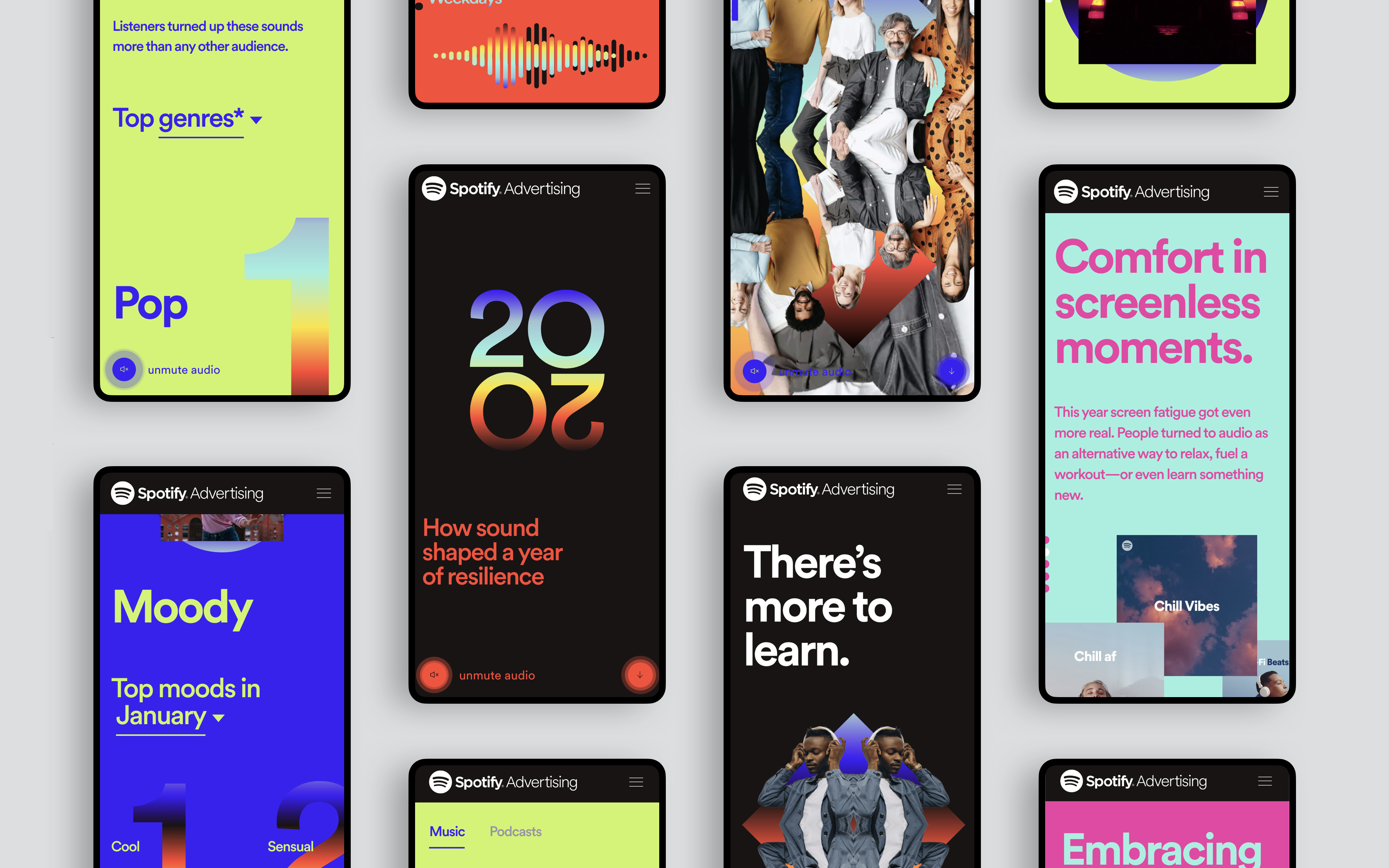
The 2020 edition attracted more than 740,000 unique visitors and generated 107 million media impressions. The format has since continued, giving marketers insights into how their audiences behave on Spotify.
No trucks. No Van Damme. No spectacular stunt.
Just useful B2B information made worth paying attention to.
The risk nobody talks about
For a CMO, category conventions can feel reassuring. The communication looks familiar. It feels appropriate.Nobody around the meeting table is likely to find it strange.
And that’s the problem.
When every company uses the same visual language, the same vocabulary and the same type of message, being appropriate can quickly turn into being interchangeable.
Interestingly, Olivia and Nora found a very similar concern in their own interviews with B2B communication professionals.
One respondent described advertising today as something that can easily become “like wallpaper” and followed it with a rather good question:
“What do I gain from becoming wallpaper?”
Six interviews don’t prove a Sea of Sameness. But they illustrate the tension.
The risk of standing out is easy to discuss. But the risk of blending in rarely gets the same attention.
So where does creativity earn its place?
B2B creativity doesn’t need to be louder, stranger or more entertaining than everything around it.
It needs to do something useful.
And there is evidence beyond B2B research that supports that distinction.
A 2020 meta-analysis by Rosengren, Eisend, Koslow and Dahlén combined 93 datasets from 67 papers on advertising creativity. It found robust positive effects from creativity, but also highlighted the importance of both originalityand appropriateness.
Creativity was not simply about being unusual.
This research wasn’t specific to B2B, so we shouldn’t pretend it was. But it points in the same direction as the newer B2B research from Ferguson et al.: novelty matters, but so does relevance.
Sometimes the familiar solution is the right one. But when “familiar” simply means following the same category codes, language and ideas as everyone else, it stops being a safe choice and starts becoming camouflage.
That’s where creativity matters: not by breaking category rules for the sake of it, but by knowing which ones help the message – and which ones only help it blend in.
Because the easiest idea to approve is often the easiest one to ignore.
Want to dig deeper? Read Olivia Bachs Theng and Nora Berndtsson’s bachelor’s thesis, Why So Serious? A Study on Humour in B2B Communication
Sources: Baack et al. (2016); Mora Cortez, Gilliland & Johnston (2020); Swani, Brown & Mudambi (2020); Rosengren, Eisend, Koslow & Dahlén (2020); Ferguson, Brown, Swani & Donthu (2025); Berndtsson & Bachs Theng (2026).
Related Work

November 12, 2025 | 4 min read
Marketing that grows with the molecule

February 25, 2026 | 6 min read
How great design builds trust in complex B2B marketing

January 13, 2026 | 6 min read
There is an AI for that. A Christmas story.

October 9, 2020 | 4 min read